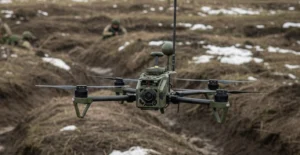
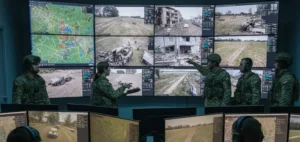
What is a FPV drone? Isn’t it the main weapon of the Armed Forces of Ukraine? These compact systems, much like construction kits, can be rapidly assembled and tailored to military tasks. However, altering the technical characteristics of each system and adding modules transforms relatively simple quadcopters into complex, innovative strike or reconnaissance UAVs. They can achieve high performance and payload capacity, cover long distances, and return to the ground station intact. In this article, we examine how FPV technology is adapted to meet the specialised tasks of Ukrainian units.
Why a Serial Drone Requires Adaptation
A drone consists of core components such as the frame, motors, propellers, flight controller, electronic speed controller, video transmitter, antenna, and camera. The material on types of military FPV drones will help you get acquainted with their functional purpose.
The receiver operates on a specific frequency to ensure uninterrupted remote control by the operator.
Both the system as a whole and each individual module are continuously improved in response to wartime conditions. The need to stay one step ahead of the enemy and to provide experienced units with the most effective UAVs drives the development of drone manufacturing and their adaptation to specific operational needs.
Improvements may focus on enhancing existing characteristics, such as endurance or lifting capability. Upgrades are achieved by integrating technologies and devices that expand functionality and improve resistance to external interference.
Hardware Modifications
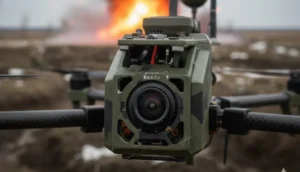
Specialised modules are installed on drones to enable them to perform particular tasks in specific conditions. Some UAVs are capable of operating in complete darkness without being detected by the enemy. These systems use thermal cameras, which detect heat and display temperature differences as colour variations on the screen.
High-power VTX video transmitters are now produced to ensure signal stability and long-range transmission. Drone modifications improve critical performance characteristics. Additional power-filtering boards eliminate electrical noise and compensate for voltage instability, protecting cameras, transmitters, and other sensitive components from damage caused by short circuits.
For fibre-optic drones, optical modems are used to convert radio signals into light impulses. In this case, the flight controller is adapted for cable-based control.
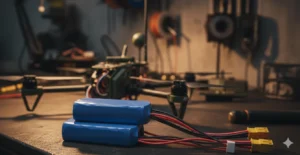
Energy efficiency remains a key task — creating conditions in which the battery charge is sufficient for long-distance flight. Since the overall weight of the drone significantly affects battery discharge, engineering teams seek ways to reduce UAV weight. Conversely, for drones designed to carry heavy payloads, solutions are developed to optimally reinforce the frame.
Software Adaptation and Firmware
Significant work is also being done on software customisation. The following solutions are widely used:
- Betaflight — open-source embedded software for flight controllers, allowing precise tuning of flight parameters and adjustment of rates (sensitivity) to match the individual operator’s control style.
- ArduPilot — open-source software used for UAV autopiloting, offering extensive possibilities for customisation.
- ELRS / Crossfire — long-range radio control systems that provide stable signal transmission from the drone to the ground station with minimal latency. Crossfire is more fixed in configuration, whereas ELRS is a highly customisable firmware for reliable communication.
- Binding Phrase — a unique identifier that creates a secure connection between the radio transmitter (controller) and the drone’s receiver. It acts as a password or unique key, ensuring the drone responds only to commands from a specific controller rather than other transmitters nearby.
UAVs are becoming more agile, manoeuvrable, and powerful, equipped with modern FPV control systems. Multi-purpose models now combine onboard electro-optical infrared observation systems (EO/IR), signal suppression capabilities (EW), and so-called machine vision. On the frontline, drones are increasingly expected to incorporate artificial intelligence to perform more functions autonomously.
Adapting to Enemy Electronic Warfare
To counter enemy EW systems, the following methods are used:
- Switching to non-standard frequency ranges that are not detected by typical enemy spectrum analysers. Changing frequency remains a simple and effective EW countermeasure.
- Using fibre-optic cable, which transmits light impulses entirely invisible to EW systems.
- Integrating terminal guidance modules with machine vision as a hardware-software solution that captures and tracks a target automatically or semi-automatically with operator input up to a certain stage.
Additionally, AI-enabled drones are being developed that can detect sources of signal interference in advance and adjust their routes to avoid affected areas.
Field Reconfiguration of Drones
Combat units may include engineering sections capable of reconfiguring and reflashing drones in field conditions. For example, a standard platform may be fitted with a higher-quality, more powerful camera, converting a strike drone into a reconnaissance UAV. Alternatively, installing a high-gain antenna can turn a drone into a signal repeater. Payload modules for bomber or kamikaze drones can be adapted to non-standard munitions or specialised equipment through custom mounts, often produced using 3D printing.
Testing and Feedback
Before any military operation, drones must undergo testing at training grounds. This is a critical stage. A copter may prove unable to execute operator commands with sufficient accuracy. Even minor discrepancies are unacceptable, especially when FPV drones are used as part of assault groups where a minute’s delay can lead to casualties.
If inaccurate response to commands is detected (climb, forward movement, reverse, etc.), calibration must be carried out. An engineer must eliminate mechanical causes of the issue, adjust the thrust controller, and retest the drone.
Before every flight, a visual inspection is required. The frame is checked for cracks or damage, all screws must be tightened, and motors securely mounted. Propellers must be free from chips, cracks, or deformation. All connectors, power systems, and cameras are inspected. VTX and receiver antennas must be intact, undamaged, and correctly secured.