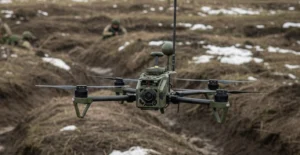
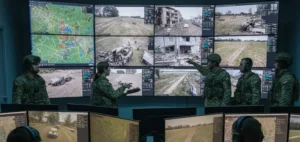
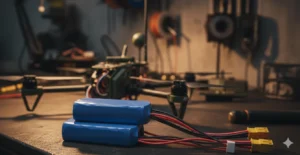
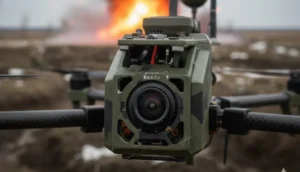
FPV drones have become almost universal strike tools in modern warfare. The operator controls the UAV from a safe distance, conducts reconnaissance, destroys enemy targets, delivers payloads, and more. Today, basic drone models have evolved into complex systems equipped with advanced cameras, AI, and dedicated release mechanisms for various types of munitions (anti-tank, thermite, etc.). As a result, a functional classification of FPV drones has emerged, described below.
The logic behind FPV system classification
Understanding what FPV is helps illustrate the critical role UAVs play in military operations. Specific missions require functions that must operate reliably and precisely. However, due to technical constraints, improving one parameter often weakens another, which is why different types of FPV strike drones exist. They are classified by:
- frame size;
- signal type;
- combat role.
Each category determines the drone’s capabilities, which should be adapted to mission requirements and operational environments. Different parameters can be combined for optimal performance and cost efficiency.
Classification by frame size (inches)
Based on frame diagonal, FPV drones can be divided as follows:
- 7-inch – compact, high-speed drones equipped with advanced cameras. Despite their speed, they offer sufficient payload capacity and are suitable for both reconnaissance and strike missions.
- 8–9-inch – slightly larger and more endurance-focused drones used for longer-range flights.
- 10–13-inch – heavy platforms designed to destroy large targets, fortifications, and armoured vehicles using explosive payloads of up to around 10 kg with significant destructive power. Drones with 10-inch and larger frames are also used as signal relays in electronic warfare environments.
The smallest models have frame sizes of up to 3 inches. The Armed Forces of Ukraine also use these in combat for precise kamikaze strikes due to their low cost and high manoeuvrability.
| Frame class | Typical role | Recommended payload | Operational range (without relay) |
| 7–8 inch | Kamikaze, light drop | 1.0–1.5 kg | 5–8 km |
| 10 inch | Heavy kamikaze, bomber | 2.5–3.5 kg | 10–15 km |
| 13+ inch | Relay, heavy bomber | 5.0+ kg | 15+ km |
There is also a classification by weight. Microdrones (up to 250 g) are extremely compact, fly discreetly, and are used for reconnaissance or filming in confined spaces. Small drones (250 g–25 kg) combine portability and power and are popular for aerial imaging. In military use, they can carry explosives over distances of up to 10 km. Larger drones are rarely used by the AFU.
Classification by combat role
FPV drones can destroy targets with high precision and collect battlefield intelligence. Four main types exist by combat role:
- Kamikaze drones – perform strike missions with self-destruction. They have simple designs and low cost. Reliable detonation of the warhead is ensured via an initiation board.
- Bomber drones – reusable drones equipped with payload modules and release systems for precise munition drops. They typically feature higher power output.
- Reconnaissance drones – conduct aerial reconnaissance, map terrain, and transmit real-time data to the ground station, where the operator can record video. Design priority is given to camera quality and extended flight time.
- Relay drones – reusable platforms that extend the operational range of other UAVs by receiving signals weakened by electronic warfare systems and amplifying them between the drone and the ground station. Equipped with powerful antennas to overcome radio interference.
UAVs can engage targets in several ways: aerial bombing (dropping grenades, mortar rounds, or adapted explosive devices), launching rockets, direct ramming of vulnerable targets, or detonating near the target via a self-destruct mechanism.
Analogue or digital: differences in application
Radio signals between the UAV and the ground station can be either analogue or digital.
Analogue signal provides continuous data transmission with minimal latency. Advantages include lower cost and better tolerance to physical obstacles such as concrete structures. Some models, such as the analogue CADDX camera used in the SkyCraft RMD 10 kamikaze drone, provide usable visuals even at dusk. However, analogue signals are prone to interference and noise (including from other drones operating on the same frequency), resulting in lower image detail and possible loss of visual information.
Digital signal systems (DJI, Walksnail) convert analogue input into discrete binary data. They provide clear, detailed HD images essential for reconnaissance and target identification. Disadvantages include higher latency and significantly higher cost (often two times or more). When interference occurs, the image may cut out completely rather than degrade gradually.
In summary, analogue is preferable for maximum transmission speed, while digital is better when image detail is the priority.
Drone control via radio channels becomes more difficult in the presence of electronic warfare (EW), which suppresses frequencies used for communication between the drone and the ground station. An alternative is fibre-optic control using light pulses, which cannot be jammed by EW systems but carries the risk of cable damage or breakage.
Day and night models
FPV UAVs adapted for night missions are known as night drones. The difference from standard (day) models is the use of night-vision cameras. Some devices operate only in twilight or moonlight, while others can “see” in complete darkness, providing accurate imagery of terrain, structures, and equipment.
Night cameras are characterised by high light sensitivity. For example, a day camera may have a sensitivity of 0.1 lux, whereas a night camera may reach 0.00001 lux. Although night operation requires more energy and produces lower-quality monochrome imagery, visibility remains sufficient for missions.
There are also thermal night cameras equipped with thermal sensors and lenses that detect infrared radiation from warm objects and convert it into an image. These cameras do not require any visible light to detect vehicles and personnel at night; detecting temperature differences is sufficient. Some may include infrared illumination (LEDs), where reflected radiation helps form an image even in total darkness.