The power system is the heart of an FPV drone, determining flight time, performance, and operational safety. In this article, we examine the types of batteries used and the characteristics that matter most for efficient UAV power supply.
The Battery as a Limited Resource
Flight range depends directly on the onboard battery that powers the drone. The rate of discharge is influenced by battery quality, total drone weight, manoeuvrability, flight speed, weather conditions, and more. It is therefore essential to find a balance between battery weight and flight time in order to use this limited resource efficiently.
Battery Chemistry: Li-Po vs Li-ion
Two main types of batteries are used to power drones:
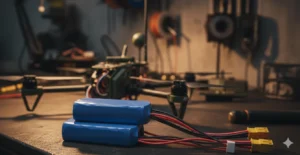
- Lithium-ion (Li-ion). A common battery type known for long service life, low self-discharge, light weight, and high energy density, making it suitable for long-duration flights. These batteries have moderate current output. Li-ion is best suited for powering relay drones and reconnaissance UAVs that operate for extended periods. In low temperatures, their capacity decreases more rapidly.
- Lithium-polymer (Li-Po). Safer than Li-ion, faster to charge, and slower to degrade over time. They are heavier but provide very high current output, making them ideal for strike and kamikaze drones that require sudden bursts of power for sharp manoeuvres. Li-Po batteries are more sensitive to physical damage and are generally more expensive.
Characteristic
| Characteristic | Li-Po (Lithium Polymer) | Li-ion (Lithium Ion) |
| Typical use | Strike drones, kamikaze, acrobatic flight | Reconnaissance, relays, long flights |
| Peak power | Very high (can sustain full throttle) | Low (for steady flight) |
| Weight (same capacity) | Heavier | Lighter (more capacity per gram) |
| Sensitivity to deep discharge | Sensitive (may swell) | More tolerant |
This comparison makes it easier to choose the correct battery for a specific mission. For more details what is a FPV drone, see the article “What is a combat FPV drone”.
Key Parameters Explained Simply
When selecting an FPV battery, pay attention to the following markings:
- Voltage. The number next to the letter “S” indicates how many cells are connected in series. The more cells, the higher the total voltage. For example, 6S provides high performance, enabling dynamic and manoeuvrable flight. “S” stands for series. The letter “P” indicates a parallel connection, which increases capacity.
- Capacity (mAh). Indicates how much energy the battery can store and deliver. Higher capacity suits longer flights for heavier drones without recharging. However, greater capacity increases battery weight, which adds load to the motors, increases energy consumption, and reduces flight time. The solution is a balanced combination of specifications.
- Discharge Rate (C-rating, in Amperes). Indicates how much current the battery can safely deliver quickly (within a few seconds). A higher rating allows the drone to accelerate sharply even under heavy load.
Understanding battery markings is essential. These parameters directly affect stability, safety, flight range, and the drone’s ability to perform manoeuvres without damaging the battery. The onboard battery powers all drone systems, including FPV payload modules, so all connected components and their power requirements must be considered. Special attention should be paid to the topic of powering load modules, since the stability of the combat mission depends on it.
Field Operation
Battery choice depends on flight style and operating conditions. Low temperatures can reduce flight time by up to 50% due to rapid charge loss, reduced capacity, and voltage drop. In freezing conditions, batteries should be kept warm before flight or even heated using battery warmers to maintain optimal temperature. Drone configuration is always adapted first to the mission requirements, and only then is the battery selected accordingly.
During storage mode, batteries must not be kept fully charged or fully discharged, as both states accelerate ageing and reduce performance. The optimal storage charge level is around 50%. This level should be monitored during long-term storage, as batteries are prone to self-discharge. After landing, the drone should be powered off before removing the battery.
Connectors and Standards
Batteries must be connected to power connectors with correct polarity. Popular connectors such as XT60 and XT90 are widely used on FPV UAVs. They can safely handle currents of 60 A and 90 A respectively without overheating or melting. Their secure fit prevents vibration thanks to a large contact surface.