Just a few years ago, FPV drones were mainly associated with racing or amateur aerial filming. Today, however, these unmanned systems have become an integral part of modern military operations. Their unique feature – real-time video transmission from a camera mounted directly on board allows the operator to feel as if they are “inside” the aircraft. Sounds cool to feel like a real pilot, doesn’t it? Let’s find out what secrets FPV drones hold for the Armed Forces of Ukraine and how they ensure incredible accuracy, speed, and operational efficiency in mission execution.
FPV drones and what makes them special?
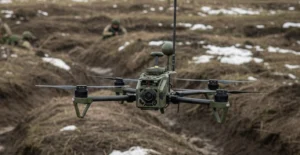
FPV drones (First Person View) – are specialized unmanned aerial vehicles whose main distinction lies in transmitting the video signal directly from the camera installed on the aircraft straight to the operator. Thanks to this, the drone operator sees the image in real time, as if being inside the cockpit of an aircraft. This makes it possible to respond as accurately and quickly as possible to changes in the combat situation and to effectively accomplish assigned tasks.
Structurally, FPV drones can be built on different platforms – quadcopters, hexacopters, or even fixed-wing aircraft, depending on the specific combat task. A typical FPV kit includes:
- the aircraft itself
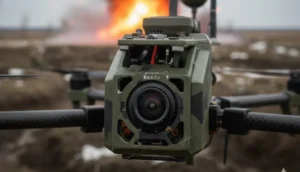
- an FPV camera (often with high resolution and low latency)
- a transmitting antenna
- a video receiver at the ground station
- specialized FPV goggles or a monitor
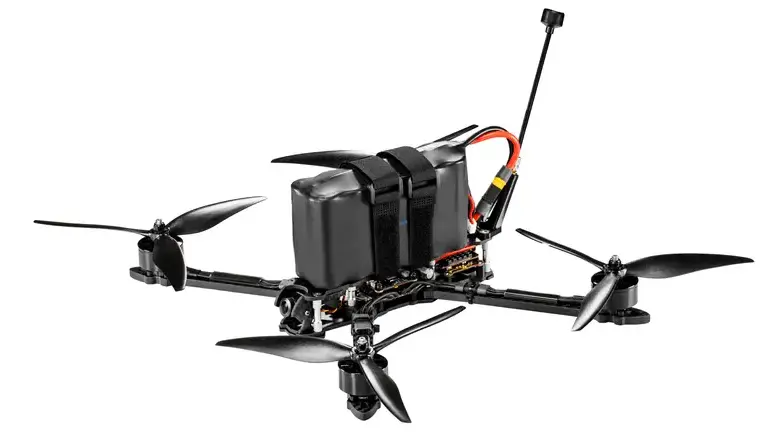
An important feature is the use of analog or digital video transmission systems. Analog systems are characterized by minimal latency, which is especially critical for FPV kamikaze drones, where every second counts. Digital systems provide higher image quality with better detail, but have higher bandwidth requirements.
Historically, the first cases of FPV drone use in the military sphere began as early as 2008, when the US military tested compact systems for reconnaissance missions in complex urban environments. The real breakthrough occurred in Ukraine with the start of the full-scale invasion in 2022. Ukrainian operators quickly adapted FPV drones for effective combat operations: reconnaissance, fire correction, and high-precision engagement of targets such as enemy armored vehicles, ammunition depots, or command posts.
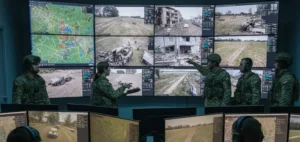
FPV technology also has important advantages in terms of operator safety, as the operator can be located at a significant distance from the front line. To maintain stable communication, FPV drones are equipped with various types of antennas: directional or omnidirectional. Additionally, ground-based relay stations are used to amplify the signal, such as aerial repeaters or ground communication stations, capable of ensuring stable control even at long distances and under conditions of active enemy electronic warfare (EW).
SkyCraft experts know that every mission has its own specifics, which is why they create custom FPV solutions with different characteristics: choice of communication frequency bands (1.2, 3.3, 4.9, 5.8 GHz), camera type (day, night, thermal), additional equipment for terminal guidance, or even the use of protected fiber-optic communication. The uniqueness of this approach lies in the fact that the operator receives not just a drone, but a comprehensive solution fully adapted to specific tactical conditions.
Advantages of FPV drones in combat operations
In modern combat conditions, FPV drones have become a critical element of military operation effectiveness thanks to a unique combination of technological characteristics and operational capabilities. Today we want to take a closer look at the advantages of FPV technologies using real examples.
First of all, the key advantage of FPV drones is exceptional maneuverability and speed. Thanks to their compact size and design specifics, such drones can reach speeds of up to 150–200 km/h and reach a target within seconds. This speed, combined with high control sensitivity, allows FPV drone operators not only to quickly deliver explosive devices to enemy positions, but also to effectively evade air defense systems and enemy EW systems.
The second important advantage of FPV drones is the ability to maintain maximum mission control until the very last second. Thanks to high-resolution FPV cameras that transmit video to the operator in real time, controlling the drone resembles direct presence in the cockpit of an aircraft. This allows for trajectory correction, rapid response to changing situations, and maximum accuracy in hitting the target. This is especially effective when using FPV kamikaze drones, where not only precision but absolute target destruction is required.
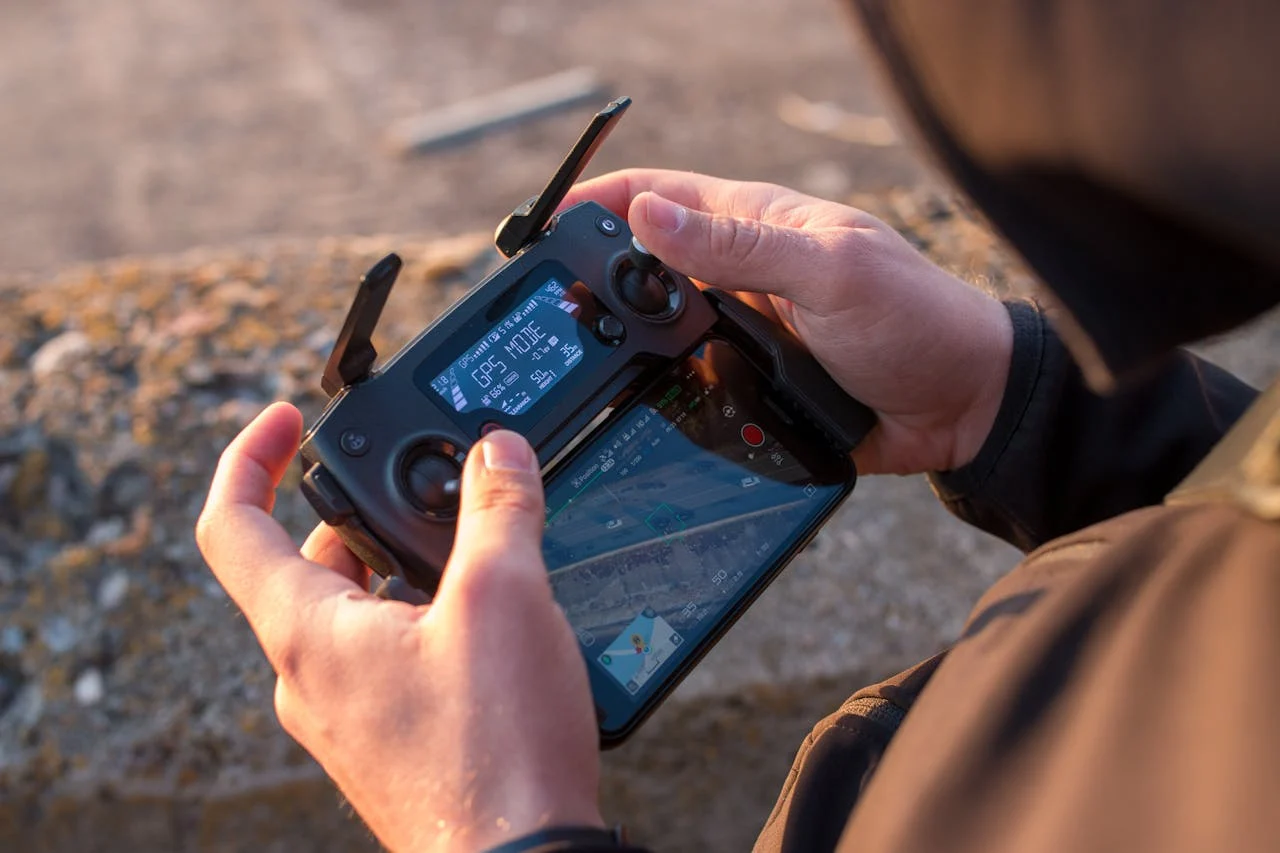
Another critical factor is the low visibility of FPV drones to enemy radars and detection systems. Due to their miniature size, use of composite materials, and radar-absorbing coatings, FPV drones have an extremely low radar and thermal signature. This allows missions to be successfully carried out deep behind the front line, even in areas of active air defense system operation.
At the same time, the effectiveness of FPV drones increases significantly thanks to properly selected signal transmission systems. In the SkyCraft range, you can find ground and aerial signal repeaters that guarantee stable control even under conditions of active enemy countermeasures. Military operators have repeatedly confirmed the effectiveness of using such repeaters, which makes it possible to conduct missions even at considerable distances.
FPV drones are also successfully combined with artificial intelligence technology, enabling autonomous flight, automatic target recognition, and tracking. This approach reduces operator workload and significantly increases the overall effectiveness of the combat mission.
Why is FPV drone customization an important element and how does it affect mission effectiveness?
FPV drone customization ー is not just an additional bonus to ready-made solutions, but an integral component that directly affects operational success. Analyzing the experience of SkyCraft clients, we often find that standardized solutions cannot always fully meet the needs of complex and dynamic combat tasks. That is why FPV drone customization has become a key principle in our production.
One of the most important aspects of drone adaptation is the configuration of communication and control frequencies. Frequency directly affects range, communication quality, control stability, and video signal transmission speed. At SkyCraft, we offer flexible configuration of the following frequency bands, each with its own advantages:
- 1.2 GHz – provides stable communication over long distances (up to 50 km and more), enabling reconnaissance missions or the use of signal relay drones for deep penetration into enemy rear areas
- 3.3 GHz – an ideal solution when it is necessary to find an optimal balance between range and data transmission speed. Often used in FPV bombers for high-precision strikes
- 4.9 GHz – guarantees fast real-time high-resolution video transmission, which is critically important for terminal guidance or fire correction missions
- 5.8 GHz – a frequency that ensures stable operation in environments with intense radio signals and is optimal for short distances, for example, for FPV kamikaze drones, where lightning-fast response and extreme maneuverability are required
Properly configured frequency makes it possible to avoid interference, effectively counter electronic warfare (EW) systems, and maximize the drone’s capabilities in complex combat conditions.
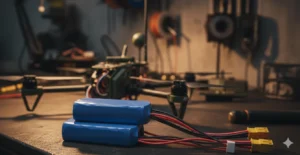
In addition to frequency configuration, the SkyCraft team customizes other important characteristics: selection of motors, propellers, batteries, camera types, and even software. For example, increasing battery capacity extends drone flight time, but at the same time affects weight and maneuverability. We always take into account the client’s specific tasks: an FPV drone for reconnaissance will differ significantly from an FPV bomber, which requires high payload capacity and precise payload release.
Custom FPV solutions allow our clients to obtain a drone that does not just perform a mission, but is maximally effective for specific combat conditions. Operators using customized SkyCraft FPV drones regularly confirm that individual configurations help reduce risks, increase accuracy, and most importantly, save soldiers’ lives by reducing the time spent in exposed positions.
Let’s choose the right drone for your tasks
When selecting an FPV drone for specific tasks, it is important to focus on key parameters that directly affect the effectiveness of your mission. SkyCraft specialists recommend paying attention to the following factors:
- Task type: for reconnaissance operations, it is better to choose drones with high flight autonomy and cameras with thermal imaging for night vision. If the goal – is a precision strike, choose an FPV kamikaze drone or an FPV bomber with maximum maneuverability and high guidance accuracy.
- Communication frequency: if long-range operation is required – it is optimal to choose lower frequencies (1.2 or 3.3 GHz) that provide a stable signal. For missions where high real-time video quality is critical, 4.9 or 5.8 GHz frequencies are suitable.
- Payload capacity: for tasks related to delivering munitions or cargo, it is important to choose models with increased payload capacity and reliable release systems.
- EW protection: if your drone will be used in areas with active electronic warfare systems, we recommend fiber-optic FPV drones, which provide maximum protection against interference.
Taking these criteria into account, you will be able to select an FPV drone that perfectly matches your mission. At the same time, if your tasks go beyond standard solutions, we are ready to develop a custom FPV drone for your unique needs.
We invite you to explore the SkyCraft product range and receive an individual consultation so that your operations always end successfully.
By choosing SkyCraft, you choose precision, quality, and the safety of your missions!