An assault group is formed for rapid advances, seizure of enemy positions, breaching defensive lines, and conducting active operations in the rear. Such missions involve close combat and high risk, and therefore require the use of advanced technological solutions for both contact and stand-off engagement of enemy targets, as well as the collection of precise intelligence. In this article, we take a closer look at the role of unmanned systems in assault operations of the Armed Forces of Ukraine.
A New Era of Infantry Assaults
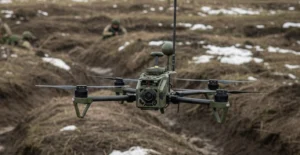
The success of active offensive actions largely depends on coordination within the group, rapid real-time decision-making, accurate awareness of a changing situation, and immediate adjustment of fire and tactics. In modern warfare, FPV drones significantly simplify these tasks and provide essential aerial support, without which a contemporary assault is virtually impossible. You can learn more about the technical adaptation of the aircraft in the material on the modification of the FPV of Ukraine.
UAVs equipped with various FPV payload modules provide cover for assault groups by destroying enemy firing points, equipment, fortifications, and other strategically important objects. They can also be used for remote mining and for delivering medical supplies to the line of contact for first aid.
Modern infantry assaults are conducted according to carefully planned tactics based on the use of aerial reconnaissance technologies. Drones are indispensable for carrying out critically important reconnaissance missions. As for strike UAVs, they complement artillery by ensuring greater precision in point-target engagement.
FPV as “Pocket Artillery”
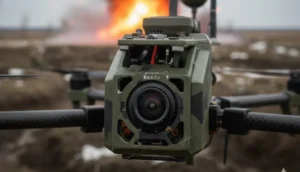
For rapid response units, speed and effectiveness are crucial. Drones provide highly accurate target engagement that is difficult to achieve with mortars. Specially trained assault brigades within the Unmanned Systems Forces conduct assaults using drones. Priority targets for UAVs during assaults include enemy vehicles and strategic structures. FPV drones fitted with shaped charges can disable tanks and vehicles by striking their most vulnerable areas (roof, engine compartment).
Drones are less frequently used to target personnel directly. In searching for targets, they can enter buildings, vehicles, and hard-to-reach places to deliver explosives. A kamikaze drone “hunting” a target inside a dugout creates significant psychological pressure and poses a serious threat. Drones are easy to assemble even in field conditions, which has made them indispensable companions of assault units.
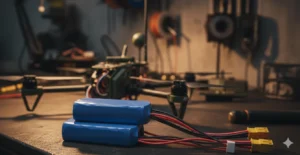
Unlike traditional artillery systems costing millions, an FPV drone can be assembled for $300–1000. They are suitable for mass production and can be effectively deployed at the level of small units.
The Operator’s Role in an Assault Group
What is FPV without an operator? The answer is obvious — an ineffective device. Only in tandem with a pilot can a UAV accomplish its mission.
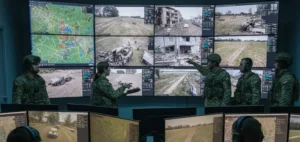
FPV drones have varying flight ranges determined by the transmitter power (signal range) and the battery powering all onboard components. During an attack, the pilot must remain at a safe distance from the target to focus fully on remote control. The UAV operator’s role involves receiving data from the drone, analysing it, and responding accurately within the context of the mission (fire correction, targeting, etc.). This requires navigation skills, an understanding of aviation meteorology, and solid technical knowledge.
During the preparation phase, the operator conducts detailed reconnaissance of the assault target. Drones identify enemy firing positions, determine the safest approach routes for the assault group, and detect mines, tripwires, or other traps. The operator estimates enemy personnel numbers, locates command posts and ammunition depots, and can simultaneously adjust artillery and mortar fire on detected targets or designate them for air strikes.
Cooperation may also occur when reconnaissance is performed by one drone and the information is used to guide a bomber or kamikaze drone. For example, a reconnaissance quadcopter operating discreetly can guide a strike FPV drone by transmitting coordinates through secure communication channels to the operator for flight correction.
Once the assault begins, the operator provides direct fire support to friendly forces. They destroy machine-gun nests that could halt the advance, eliminate enemy snipers, and breach fortifications. Drones clear trenches before the assault troops move forward, neutralise the enemy in shelters, and block routes for retreat or reinforcement. An important function is countering counter-attacks by detecting enemy reserves, destroying approaching armoured vehicles, and engaging hostile groups attempting to encircle friendly forces.
Tactics in Different Conditions
At the tactical level, drones are less often used against dispersed groups of enemy personnel. On the frontline, FPV drones are adapted primarily for engaging specific targets, such as destroying fortifications or vehicles. Assault tactics involve using drones for:
- clearing trenches, as UAVs can reach remote sections and bends where grenades are ineffective;
- conducting combat in urban environments and striking the enemy inside buildings;
- destroying vehicles and halting armoured groups approaching positions, usually with the help of bomber drones.
At the final stage of an operation, the drone pilot covers the evacuation of the wounded and ensures the safe withdrawal of the group from the objective.
Coordination and Safety (Friendly Fire)
Careful coordination of drone sorties is essential to avoid friendly fire or signal suppression by friendly electronic warfare (EW) systems. It is important to ensure cooperation between infantry and Unmanned Systems units, maintain communication with nearby Ukrainian units, and keep clear radio communication. Marking positions on the ground is critical to prevent friendly fire incidents.
Countering Trench-Level EW
Drones are vulnerable to external factors such as weather conditions, terrain, and EW systems. If trench-level EW is active, the first 150 metres of flight should be conducted at an altitude of up to two metres, using terrain for cover, after which altitude can be gained while remaining alert to potential EW influence.
When the enemy activates a local jammer during an assault, it is necessary to:
- change operating frequencies and leave the affected spectrum;
- use support drones or mobile repeaters to strengthen and stabilise the signal;
- deploy fibre-optic drones in open terrain.
These actions help prevent the drone from being “blinded” due to loss of control signal, communication failure, or GPS spoofing. Additionally, cryptographic signal protection and autonomous flight modes can be used so the drone continues movement without manual control. Heavy drones designed to engage highly protected targets can carry payloads over long distances and are equipped with flexible frequency-tuning systems for EW resistance.