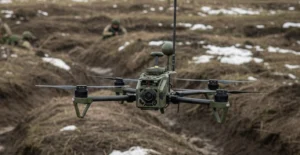
The construction of bomber drones includes an electromechanical mechanism that holds a warhead (or other payload) during transit to the mission area and releases it onto the target with high precision. What is fpv and everything about load modules for FPV drones is explained in the article.
Classification of Warheads
According to the classification of FPV drones used by the Armed Forces, only bomber drones are equipped with a module for securing and releasing warheads. Kamikaze drones also have a mechanism for holding a payload, but they do not release ammunition, as this type of UAV destroys targets through direct impact and detonates together with the explosive charge.
The payload capacity of the release system varies depending on the drone’s specifications. The following types of warheads are commonly used:
- Shaped-charge. These munitions direct explosive energy in a single direction, providing high penetration capability. They are intended for destroying armoured vehicles and heavily fortified structures.
- Fragmentation high-explosive. This is the most diverse class with a wide damage radius. All types share a common effect: they generate a blast wave with fragments that rapidly disperse over a large area. Fragmentation warheads are primarily intended for engaging personnel (infantry) and light equipment.
- Thermobaric. These create a volumetric explosion followed by the formation of an aerosol cloud of fuel mixture which, after ignition by a secondary charge, detonates and produces a powerful blast wave causing severe destruction and injuries. The high temperature at the end of the process also causes combustion. They are intended for use in enclosed spaces (dugouts, buildings).
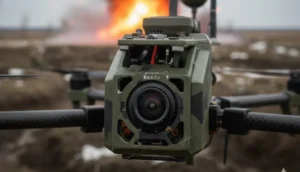
There are drones that can be fitted with barrel modules of various calibres that fire rounds sequentially in automatic mode or in a simultaneous discharge. Payload blocks with any type of munition vary in weight and are mounted as an external suspension under the frame, centrally positioned below the FPV camera. These blocks are installed using various electromechanical devices such as magnetic locks or lever latches, which release the payload more often via a remote command from the operator. It is worth considering day and night cameras separately, which are selected depending on the conditions of the combat mission.
Initiation Board (Detonation Board)
To ensure detonation of explosives, an initiation board is installed in the drone’s payload module. It is a compact device designed according to the specific mission requirements and the characteristics of the strike drone.
The detonation board can be:
Contact-based, where the explosion occurs at the moment the drone contacts the target for precise impact (for example, against enemy equipment).
Remote (non-contact), intended for area effect, when the operator sends a radio signal to trigger detonation.
Inertial, which activates after certain conditions recorded by sensors are met, such as collision, impact, or a sudden change in the drone’s velocity.
Through integration with sensors (proximity sensors, accelerometers, etc.) and other UAV systems, the initiation board ensures high accuracy when engaging both stationary and moving targets. The board always includes protection against premature accidental detonation and typically has a programmed self-destruct function.
Payload Release Systems
The release system is mounted on the drone frame. It can be used not only for warheads but also for delivering supplies, medical items, small tools, and other payloads. Thus, free payload release (grenades or other munitions) from bomber drones is performed by command from the initiation board. During transport, the payload is secured using mechanical or electromagnetic mounts. There are single-position and multi-position release systems. The latter are equipped with several independent locks for sequential release of multiple munitions. There is also a drum-type system for smooth unloading of a series of warheads.
Release systems differ by the type of activation:
- Servo-driven. A high-precision servo reacts to a remote signal and activates the mechanical release system by opening lever mechanisms and locking devices such as latches. It operates with high reliability.
- Automatic. Activated by a timer signal or GPS coordinates without additional instruction from the ground station.
Release systems must be compatible with the drone in terms of dimensions, frame design, and the availability of connectors, including connection to the battery for power supply if no built-in battery is present. The release mechanism must be lightweight, as additional weight increases the drone’s total mass and directly affects performance (speed, range, manoeuvrability).
Specialised Modules
A complex, intelligent release system may be complemented by additional specialised modules that extend its functionality, including:
- Guidance correction systems. Through a hardware–software complex, such drones can calculate the trajectory required to hit the target, correct it in case of loss of control, and complete the mission independently if communication with the operator is disrupted by electronic warfare (EW).
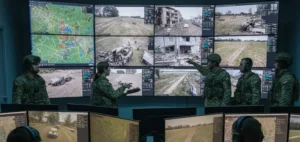
- Relay drone. A drone that accompanies the strike UAV to extend its operational range and mitigate EW interference. The accuracy of the release in difficult conditions at long distances from the ground station may depend on it.
- Machine vision and AI. These tools can detect targets, transmit their coordinates, and perform automatic guidance in the final stage of flight. For maximum accuracy, they perform terminal guidance during the last 500 metres of flight.
- GPS navigation, which uses satellite data to determine coordinates in real time and maintain the drone’s position for accurate payload release.
- Night vision cameras, capable of producing images in low-light conditions (for example, moonlight) or with infrared illumination.
- Thermal imaging cameras, which detect and display live or warm objects in complete darkness. This is particularly important for FPV drones operating as part of assault groups that require 24/7 aerial support.
These specialised modules may be interchangeable, integrated into the drone frame, or independent (such as a relay drone).
Power Consumption and Weight
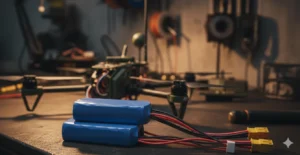
The total weight of the drone affects flight duration. The heavier the drone, the faster the battery discharges. A heavy payload module leads to increased power consumption and reduced flight range. In general, all drone components (camera, initiation board, and others) are powered by the onboard battery. Therefore, only equipment that is critically necessary for mission completion should remain on the UAV frame.
To optimise power consumption in other ways, operators should choose routes that minimise unnecessary manoeuvres requiring additional energy and use power-saving modes. Above all, preference should be given to high-quality batteries.