Just 20 years ago, unmanned aerial vehicles (UAVs) were something from the future, used in reconnaissance missions or remaining a concept in military research. However, modern technologies have made unmanned systems accessible, effective, and indispensable in combat conditions. The war in Ukraine proves day by day that drones are a key element of modern combat tactics. From FPV kamikaze drones to powerful bombers, all these solutions help expand unit capabilities, reduce personnel losses, and increase mission effectiveness.
Ukraine has become a global innovator in the field of military drones, actively developing FPV systems, unmanned aircraft, and ground control stations. But let us take a closer look at the difference between the terms “drone,” “UAV,” and “quadcopter,” and which of these solutions truly works on the battlefield.
From concept to reality: how UAVs became combat technology
The history of unmanned aerial vehicles dates back to the early 20th century, when the military attempted to create remotely controlled aerial bombs. During World War I, experiments were conducted with primitive radio-controlled aircraft, but technological limitations did not allow them to be effective. In World War II, Great Britain and the United States developed unmanned targets for training anti-aircraft artillery, while the Soviet Union worked on the first unmanned reconnaissance vehicles.
In the 2000s, the United States changed its approach to unmanned aviation by integrating it into modern military strategy. Predator and Reaper drones became key elements of strike missions, enabling precision strikes and long-term surveillance of the enemy. Turkish Bayraktar TB2 systems, which began to be actively used in the 2010s, demonstrated the effectiveness of strike UAVs in asymmetric conflicts, where mobility and autonomy played a key role.
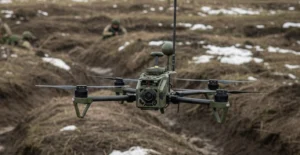
However, the real technological breakthrough occurred during the full-scale war in Ukraine, where FPV drones, kamikaze drones, strike bombers and other models began to be widely used in combat operations. Ukrainian forces extensively employed FPV drones, which significantly increased the effectiveness of destroying enemy equipment and manpower without risking personnel.
The use of unmanned systems has changed the very concept of warfare. If previously dominance on the battlefield depended on the amount of artillery and aviation, today effectively used UAVs can compensate for a lack of heavy equipment by delivering precision strikes on the enemy without the need for direct contact.
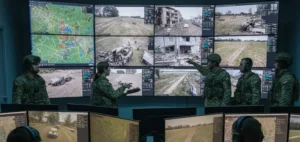
Thanks to new technologies, drones have become a key component of tactical reconnaissance, strike missions, and electronic warfare. The use of signal repeaters, aerial and ground control stations, and fiber-optic FPV drones makes it possible to reduce the vulnerability of unmanned systems to electronic countermeasures and increase their operational range.
The modern military technology market is now focused on developing custom solutions for specific tasks. Drones are no longer a universal product — they are adapted to communication frequencies, flight range, fire correction, and other critically important parameters. That is why companies engaged in custom UAV manufacturing are seeing growing demand.
This technological revolution is ongoing, and unmanned systems are already shaping the future of combat operations.
So what is the difference between a UAV, a drone, and a quadcopter?
The term UAV (unmanned aerial vehicle) refers to any aircraft that operates without a human on board and is controlled remotely via ground control stations or is capable of flying autonomously according to a predefined program.
This is the broadest definition, covering various types of platforms:
- unmanned aircraft
- helicopters
- hexacopters
- quadcopters
- octocopters
- kamikaze drones
- reconnaissance platforms
- as well as unmanned airborne signal repeaters.
UAVs can vary in size, weight, technical characteristics, and application capabilities — from long-range reconnaissance missions to tactical operations aimed at destroying specific targets.
The concept of a “drone” is a generalized term for remotely controlled aerial vehicles of various designs and purposes. This term originates from the English word “drone,” which literally means a male bee. Initially, the term was used for simple unmanned aerial vehicles employed as targets for training air defense units, but over time it gained a broader meaning.
Today, drones can refer to any aerial vehicles that do not require a pilot on board and are controlled remotely via radio communication or specialized FPV (First Person View) systems, where the operator sees everything from the drone’s perspective through special goggles or a screen. In wartime conditions, drones have undergone significant development and transformed into high-precision tools for reconnaissance, artillery targeting, and direct target destruction.
It is worth noting that the term “drone” in the modern sense is often applied to small or medium-sized aerial vehicles that have a compact form, high maneuverability, speed, and the ability to effectively perform precision missions. These may include both strike FPV drones for the Armed Forces of Ukraine and tactical FPV kamikaze drones, which provide rapid target engagement with minimal risks to frontline personnel. However, not all UAVs, particularly large platforms (for example, the Bayraktar TB2), are commonly referred to as “drones.” Such systems are conceptually closer to classic aircraft that are remotely controlled from a ground station.
Separately, it is worth highlighting the quadcopter, which is one type of UAV with a distinct design feature: four rotors, each controlled by a separate electric motor. Thanks to independent control of each propeller’s speed, quadcopters achieve high flight stability, maneuverability, and the ability to take off and land in challenging conditions, including confined spaces and areas with uneven terrain.
Quadcopters are distinguished not only by their maneuverability and flight speed, but also by their compactness, ease of transportation, and simplicity of setup and operation. Military quadcopters, which gained popularity in 2022–2025, are predominantly used in FPV mode. Thanks to specialized FPV cameras and high-precision navigation systems, the operator gains the ability to control the drone in real time, quickly respond to changing conditions, and perform tasks with high accuracy.
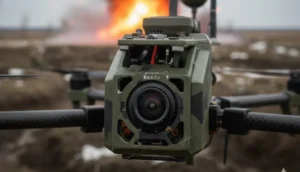
In particular, in the war between Ukraine and Russia, quadcopters have evolved into a powerful means of reconnaissance and tactical strike. FPV quadcopters are successfully used as kamikaze drones for the precision destruction of armored vehicles, artillery systems, or fortified enemy positions. They are also actively used as FPV bombers capable of carrying and accurately dropping munitions on enemy positions.
Thus, a quadcopter is not just a type of drone, but a highly effective tool in modern combat conditions. It has smaller dimensions than classic unmanned systems, can be launched quickly, does not require complex infrastructure, and thanks to FPV systems, the operator gains absolute real-time situational awareness. These characteristics are exactly what have made quadcopters an indispensable solution on the modern battlefield.
Let us draw conclusions
Therefore, all quadcopters and drones are UAVs, but not every UAV is a quadcopter or a drone in the narrow sense of the word. The difference lies in the scale of application, design types, equipment capabilities, and the level of autonomy of the system.
At SkyCraft, we focus specifically on specialized and custom unmanned systems: from FPV kamikaze drones to high-precision FPV bombers and airborne and ground signal repeaters. Our approach involves manufacturing batches starting from 100 units with flexible customization of characteristics — from communication frequencies to navigation systems and payloads.
It is this individual adaptation that makes it possible to obtain a drone that best meets the needs of fighters and works effectively in real wartime conditions.