
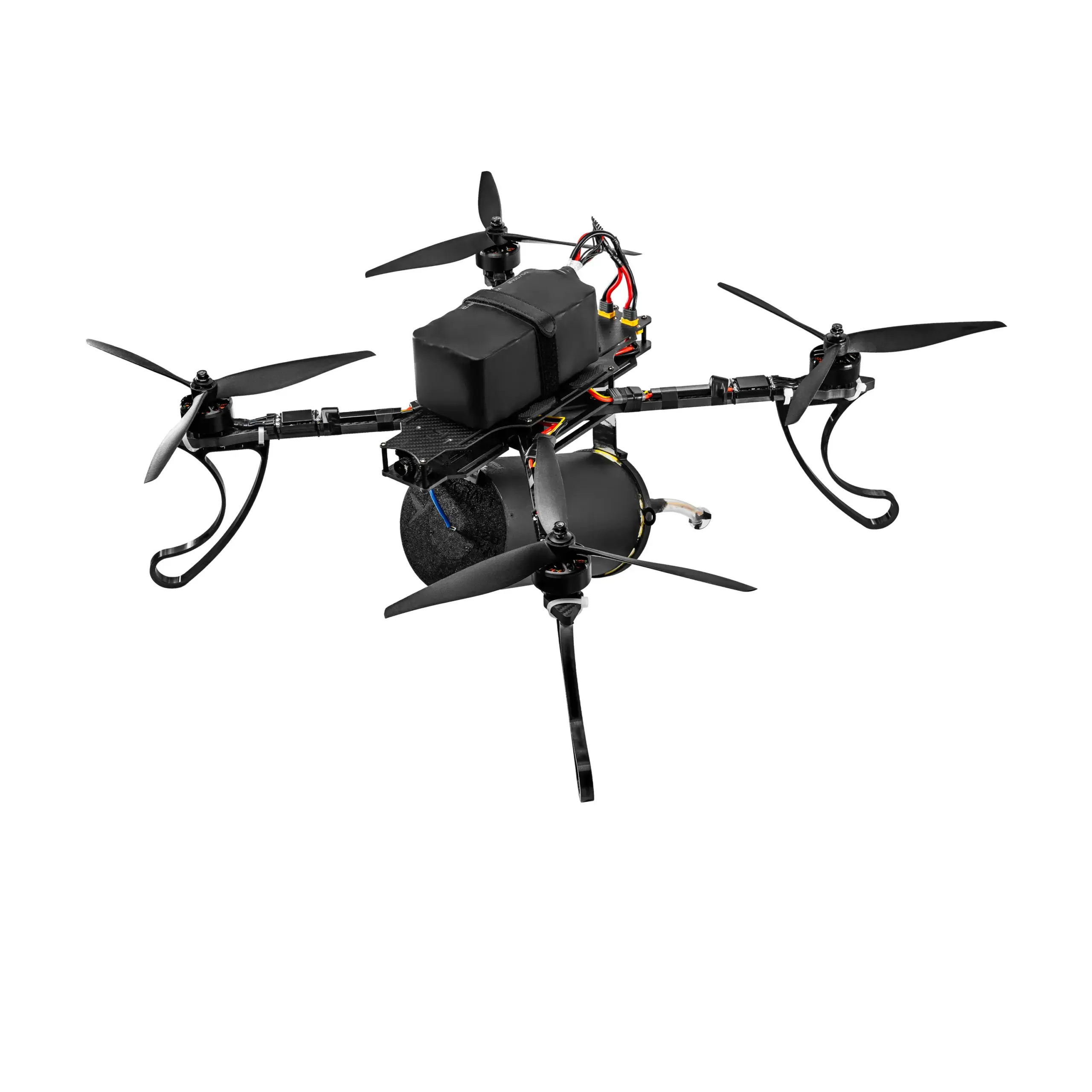
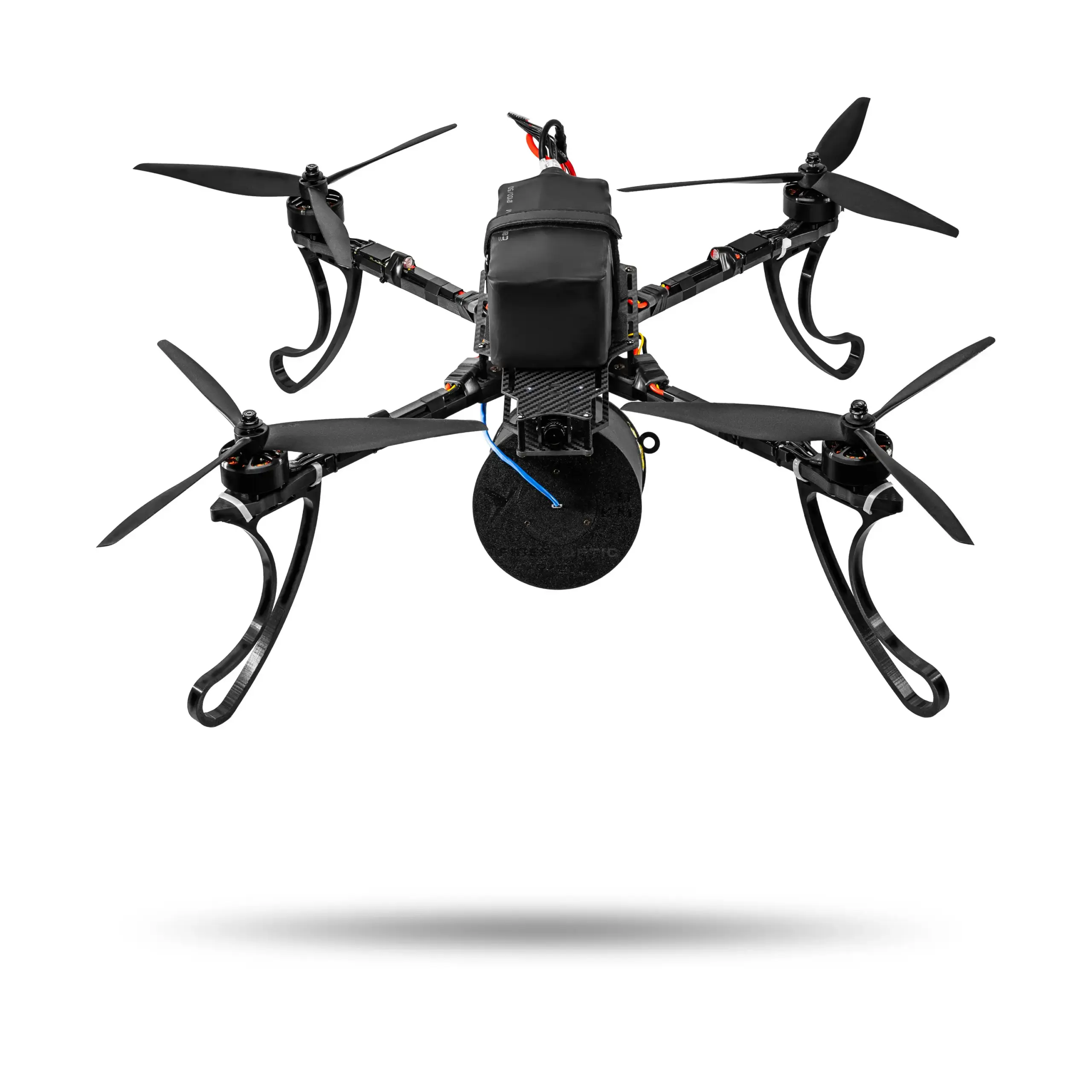
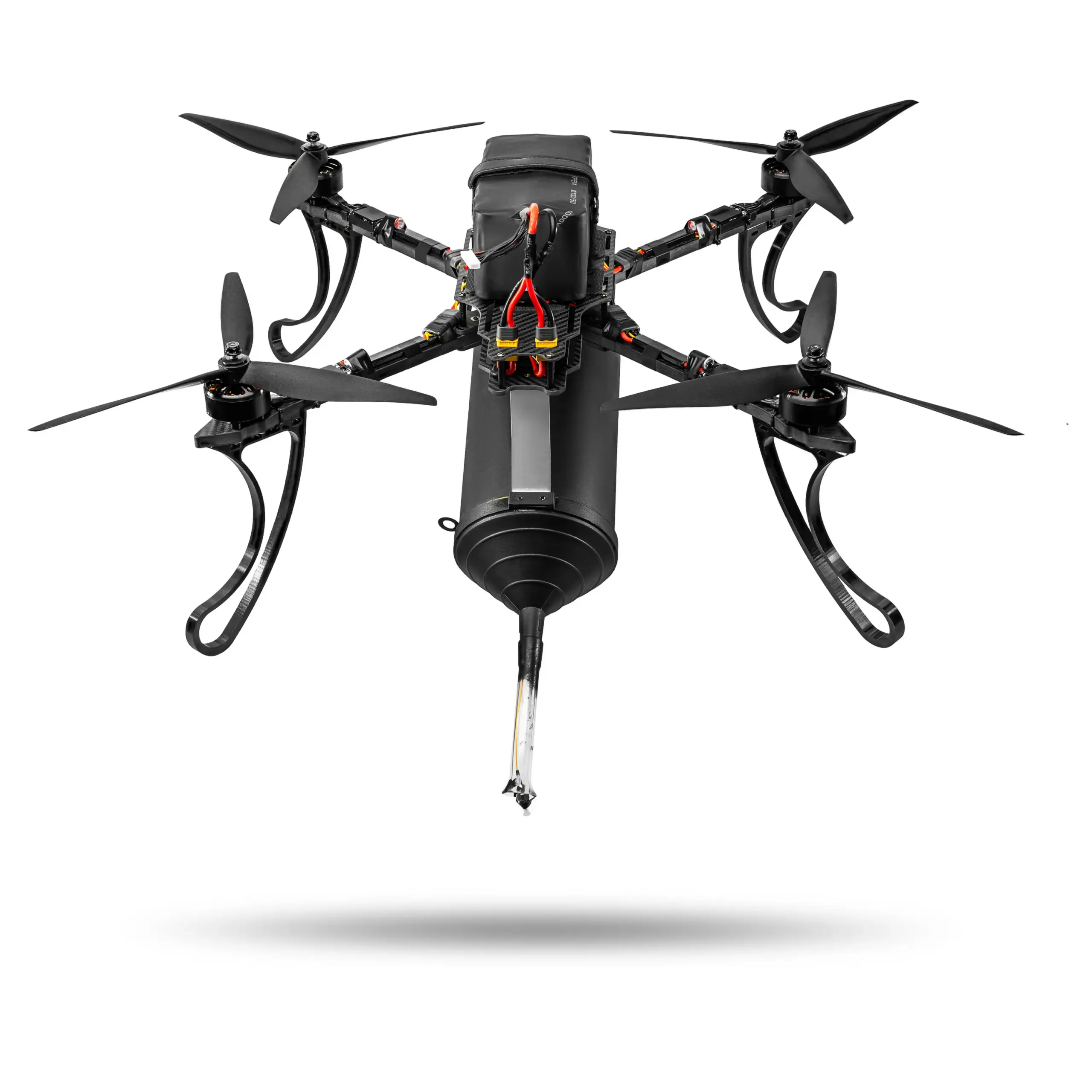
SKYCRAFT FOC‑15.20‑25 – Fiber‑Optic FPV Drone for EW Zones
A UAV on a fiber optic cable is a tool for performing tasks in an active electronic warfare zone when no other drone can operate. It provides guaranteed communication—stable video transmission and the ability to control the device from cover without the risk of exposure. This is a solution for units that need a drone that always works, regardless of interference, terrain, or the intensity of electronic warfare.
Technical specifications
Payload capacity
6,000 g
Flight time (with / without payload)
From 20 min / up to 40 min
Operational range
20–25 km
Wind resistance
6–8 m/s
Maximum speed
115 km/h
Cruising speed
50 km/h
Maximum flight altitude
1 km
Deployment time
2 min
Fiber-optic cable length
22–26 km
Control and video station
Universal; not included in the standard package
Specifications
Technical parameters
| Name of characteristic | Value |
|---|---|
| Frame type | Carbon fiber, X-shaped |
| Frame size | 15″ (diagonal distance between motor centers) |
| Overall dimensions (W × L × H) | 836 × 836 × 190–250 mm (with propellers and antenna) |
| UAV weight without battery | 2.2 kg |
| Maximum takeoff weight (MTOW) | Up to 9.4 kg |
| Payload capacity | Up to 7.2 kg (maximum) |
| Propulsion system | Brushless electric motors |
| Number of motors | 4 |
| Propeller diameter | 15″ |
| Fiber-optic spool | TURA 10–40 km – FPVkit |
| Fiber type | G657.A2, 0.25 mm |
| Connector | FC/UPC |
| Flight controller | F722 type (SoloGood F722 or compatible) |
| Firmware / software | BetaFlight |
| Camera | Analog FPV, minimum 1800 TVL |
| Camera sensitivity | ≥ 0.00001 lux |
| Target guidance | Manual / pilot-assisted (or visual guidance by operator) |
| Operating speed | Up to 50 km/h (at maximum permissible weight) |
| Maximum speed | Up to 80 km/h (without payload) |
| Flight range (combat radius) | Up to 25 km* (depending on communication conditions, terrain, payload, etc.) |
| Range limitation | Determined by the length of the fiber-optic spool |
| Recommended fiber length | 15″ frame — up to 26 km |
| Flight time with payload | ~28 min |
| Maximum allowable wind speed | Up to 7 m/s |
| Navigation system (GPS) | Optional |
| Electronics protection rating | IP30 |
| Operating temperature range | −20 °C to +40 °C |
| Operating conditions | No thunderstorms, lightning, or heavy precipitation |
| Deployment time | ~2 min |
| Battery type | Li-Ion / Li-Po |
| Battery configuration | 1 × 8S (33.6 V), up to 15 Ah |
| Battery charging | From 220–230 V AC via charger |
| Control and video station | Supplied separately, universal |
Why choose SKYCRAFT FOC‑15.20‑25 – Fiber‑Optic FPV Drone for EW Zones
Drones on fiber optic cable are one of military solutions SkyCraft for tasks where radio communication may be disrupted or jammed. Instead of a traditional radio channel, they use a thin, long optical cable that runs from a reel behind the drone. This design makes the connection insensitive to electronic warfare and radio-electronic interference: the control commands and video from the camera are transmitted as stably as possible, even if the enemy is actively jamming the airwaves.
The fiber optic cable system becomes critically important when other means of communication are unreliable or unsuitable.
Key design features and engineering solutions
Instead of a standard VTX/receiver, a media controller and media converter are used, through which the cable transmits video and commands. This provides stable, instantaneous transmission—without lag, even over long distances.
Depending on the coil used, the operator can set different flight ranges – from a few to tens of kilometers. The drone “pulls” the cable (single-mode fiber optic) behind it, eliminating the need for a radio signal and allowing the pilot to remain in a safe place without revealing themselves either on the air or visually.
Advantages of the model compared to classic FPV drones
The main advantage is immunity to electronic warfare and radio-electronic interference. Even if the enemy tries to jam the airwaves, the drone remains under control. Stable video transmission is ensured without delays or interruptions, which increases the reliability of control over long distances. Such drones can operate in difficult terrain, in gorges, lowlands, or other obstacles where the radio channel could lose connection due to shielding or interference.
SkyCraft offers drones with a fiber optic cable control system – ready for serial production and configuration at the customer’s request. If your units need a reliable, jamming-resistant FPV platform, we are open to wholesale orders and can customize the configuration for specific tasks.
Frequently asked questions about fiber optic FPV drones
What is the maximum flight range of fiber-optic drones?
Today, fiber-optic drones demonstrate high efficiency at average distances of 10–20 km. Modern variants can operate at ranges of up to 40–50 km, depending on the configuration and operational conditions. A crucial advantage is their complete immunity to Electronic Warfare (EW) measures, as control is maintained through a physical fiber-optic connection.
What are the advantages of fiber-optic drones compared to radio-controlled ones?
The primary advantage is a stable and secure communication channel that does not rely on radio frequencies. This completely eliminates EW interference and ensures uninterrupted control. Additionally, fiber optics provide high bandwidth, enabling the transmission of real-time video and telemetry without any loss of quality.
How does the fiber-optic connection work in the drone?
The connection is established via a media converter, which converts control and video signals for transmission over the fiber-optic cable. Combined with the cable and relevant hardware, it ensures stable communication, transmitting commands, telemetry, and video signals without utilizing a radio channel.
How to order a fiber-optic drone?
To order a fiber-optic drone, submit a request via the website form or contact a manager to specify the required configuration. Following this, you will receive assistance with model selection, agreeing on the quantity, production timelines, and delivery methods.
What are the terms of cooperation with SkyCraft?
Cooperation is based on direct order alignment: you describe your requirements, and our team coordinates the technical parameters, quantity, timelines, and delivery terms. If necessary, custom modifications can be made for specific mission requirements.